First, understand what you are visiting
The letters in Revelation were addressed to congregations in Ephesus, Smyrna, Pergamon, Thyatira, Sardis, Philadelphia and Laodicea. Their modern locations are spread across the Aegean region: Selçuk, İzmir, Bergama, Akhisar, Sart near Salihli, Alaşehir and the Denizli area.
Some stops preserve extensive ancient cities; others are represented by more modest remains within modern towns. That difference matters. Do not expect seven identical churches. A good guide explains the biblical message, the Roman provincial setting and what can genuinely be seen at each place without turning tradition into archaeological certainty.
Days 1–2 · İzmir, Smyrna and Pergamon
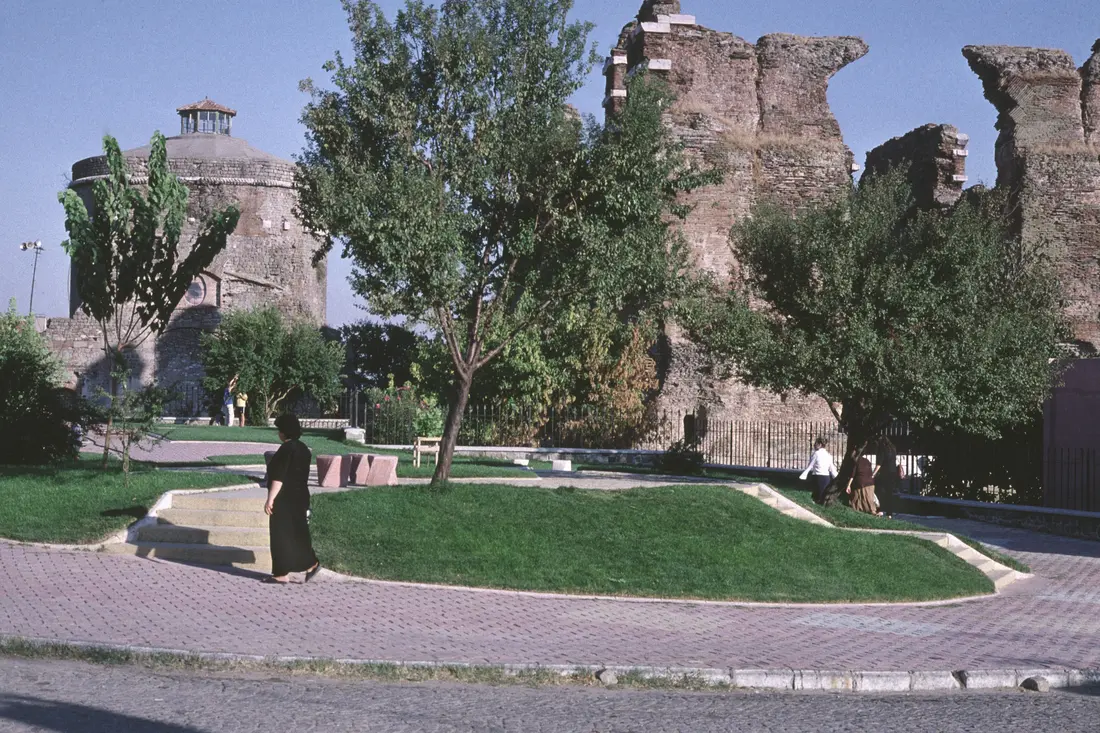
Begin in İzmir with the Agora of ancient Smyrna, then give Pergamon a separate, substantial visit. Pergamon’s wider landscape includes the hilltop acropolis, the Asclepion and the monumental Red Basilica area. The official GoTürkiye route pairs Smyrna and Pergamon, but the amount of driving and walking still deserves an early start.
An overnight around Bergama can make the first part of the circuit more comfortable. Ask which components are included and how the vehicle route connects them. If your group is particularly interested in early Christianity, request a guide experienced in faith heritage rather than assuming every general archaeological tour follows the letters in depth.
Day 3 · Thyatira, Sardis and Philadelphia
Continue through Manisa province. Thyatira lies within modern Akhisar; Sardis is near Sart and Salihli; Philadelphia is represented at Alaşehir. These three stops form a logical road sequence, but they are not equal in scale.
Sardis deserves the largest time allowance because its archaeological landscape includes the Temple of Artemis, a major synagogue, Roman civic remains and a late antique church. Philadelphia’s surviving monumental brick remains are more limited, while Thyatira sits within a living town. Build the day around interpretation and realistic driving rather than the number of photographs promised.
Day 4 · Laodicea, with Pamukkale nearby
Laodicea is close to Denizli and Pamukkale, making the final church geographically suitable for a Denizli-area overnight. Excavation and conservation continue across a large ancient city. Confirm which areas are open and allow for exposed walking surfaces.
Pamukkale and Hierapolis can enrich the journey, but they are not substitutes for Laodicea. If you add them, allow a separate half or full day according to your interests. Our Pamukkale and Hierapolis guide explains why the terraces and ancient city should be planned together.
Day 5 · Ephesus and the Selçuk heritage landscape
Finish at Ephesus, one of the most substantial ancient cities on the route. The UNESCO World Heritage property reflects Hellenistic, Roman Imperial and early Christian history. In the wider Selçuk area, the Basilica of St John and the House of the Virgin Mary are commonly included in Christian heritage programmes, subject to current access and the interests of the group.
Do not compress Ephesus into a departure morning unless your timing genuinely allows it. Its stone streets, slopes and optional sections require attention. If your wider programme also includes Pamukkale, use our Ephesus–Pamukkale route guide to avoid unnecessary backtracking.
Plan it as a pilgrimage, not a checklist
- Share your group’s denomination, study focus and preferred Bible translation with the planner.
- Request a licensed guide with relevant Christian-history experience.
- Ask about walking distances, shade, stairs and vehicle access at every site.
- Keep worship, Mass or private ceremonies separate from ordinary sightseeing access and request permission in advance.
- Confirm admissions, hotel locations and the final route shortly before travel.
Five days creates a more thoughtful rhythm than a rushed circuit. For church, academic or private groups, the team can adapt the sequence around flights, hotel standards, guiding language and the time you want for reflection.