Two UNESCO sites, two different worlds
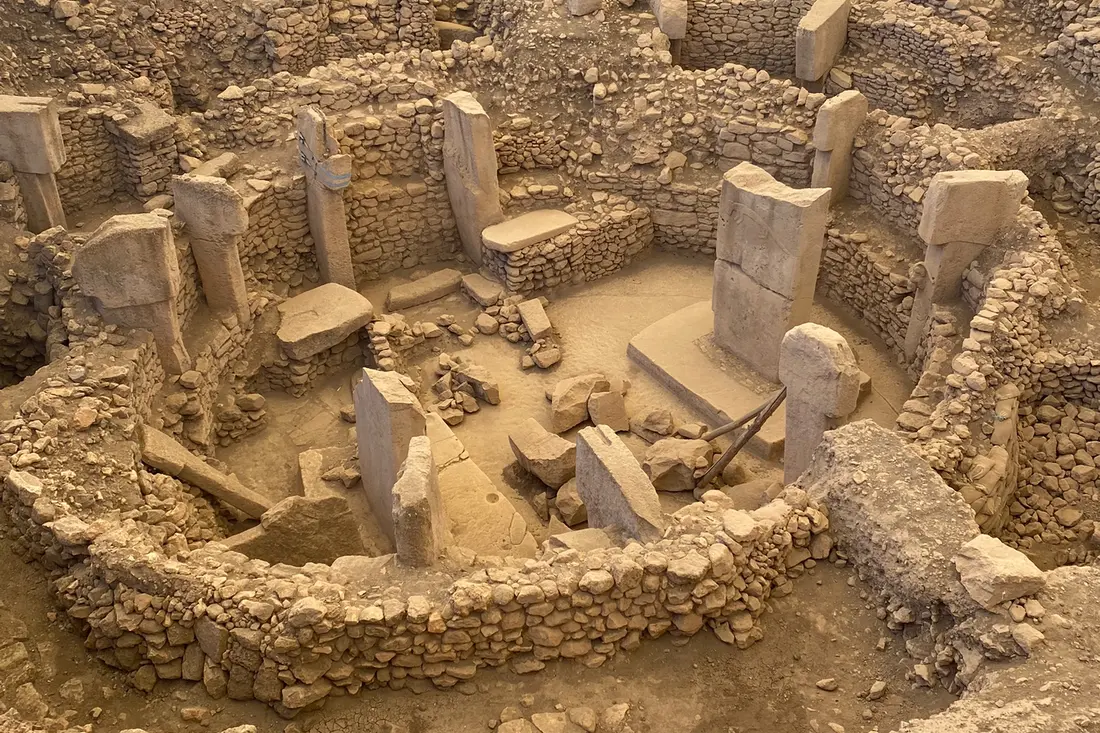
Göbekli Tepe stands in the Germuş mountains near Şanlıurfa. UNESCO dates its monumental structures to roughly 9,600–8,200 BCE. Hunter-gatherer communities erected circular, oval and rectangular enclosures with distinctive T-shaped limestone pillars, some carved with wild animals.
Mount Nemrut belongs to the first century BCE. At the summit, King Antiochus I of Commagene created an ambitious tomb-sanctuary whose colossal sculpture brought together Greek and Persian traditions. The two sites should not be presented as one civilisation or one continuous story; the distance in time is part of what makes the route remarkable.
Days 1–2 · Begin in Şanlıurfa
Use the first day for arrival and Şanlıurfa’s historic centre. On the next day, make Göbekli Tepe the main excursion and pair it with the Şanlıurfa Archaeology Museum when opening arrangements and timing permit. Seeing the site and its wider archaeological context together is more useful than treating the pillars as isolated objects.
At Göbekli Tepe, remain on the visitor route and respect protected areas. Archaeological interpretation continues to develop, so be cautious with dramatic claims that go beyond the evidence. A knowledgeable guide can explain what is known, what remains debated and how the site relates to other Neolithic places in Upper Mesopotamia.
Day 3 · Cross towards Adıyaman
Do not count the transfer from Şanlıurfa to the Mount Nemrut region as an invisible gap between two full sightseeing days. Plan a road day with appropriate stops and a clear hotel destination. Kahta can be a practical base for the national park; Adıyaman offers a different city-based option.
The official GoTürkiye Mesopotamia route connects Şanlıurfa and Adıyaman across the Euphrates. Optional places such as the Atatürk Dam viewpoint or regional heritage stops should be added only when they fit the season, road conditions and group pace. Ask for the exact sequence rather than a generic list.
Day 4 · Mount Nemrut and the Commagene landscape
Mount Nemrut rises to about 2,150 metres. The summit sanctuary is associated with Antiochus I of Commagene, who ruled from 69 to 34 BCE. Its eastern and western terraces, monumental heads and stone tumulus form one of the Hellenistic period’s most distinctive ensembles.
Sunrise and sunset are popular, but the visit should not be sold as a guaranteed weather moment. Summit access, visibility, temperature and road conditions can change. The approach also involves walking on exposed, uneven terrain. Confirm the current vehicle point, walking time and local access before fixing a dawn departure for every traveller.
Day 5 · Protect the onward journey
Keep the final day realistic. If you have a flight, confirm the operating airport, transfer duration and check-in allowance before adding another excursion. A late departure may leave room for a focused Commagene stop; an early one does not.
For a longer journey, the route can continue towards Gaziantep, Diyarbakır or Mardin, but each extension changes the transport plan. Southeastern Türkiye should not be treated as a collection of quick detours. Distances, seasonal conditions and museum schedules deserve the same attention as the headline sites.
A useful planning brief
- Send exact arrival and departure points, not only dates.
- State whether sunrise or sunset at Mount Nemrut matters to you.
- Mention mobility concerns, especially for exposed paths and the summit approach.
- Ask which museums, admissions, meals and guide services are included.
- Keep current access, weather and road checks in the final confirmation.
The result can be a focused four-day private journey or a slower five-day exploration with more time in Şanlıurfa. The right version depends on usable flight times and how deeply you want to explore the archaeology.