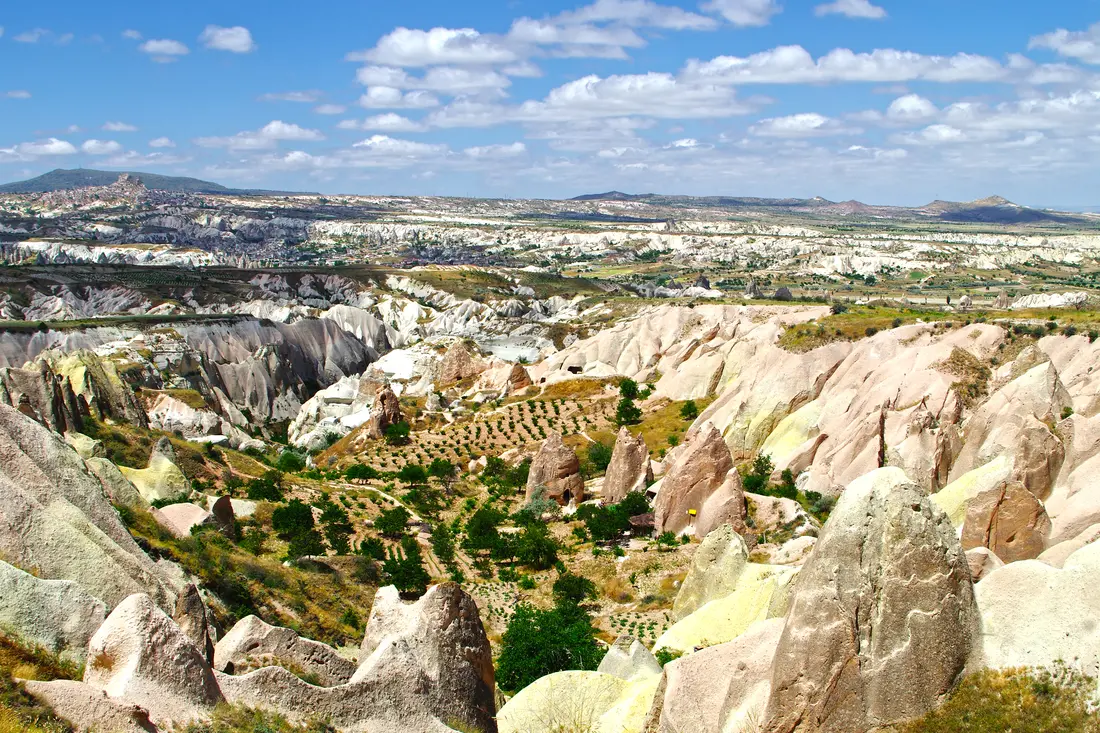
The quick answer: when should you go?
April to June and September to October are useful starting points for many travellers because temperatures are generally kinder to valley walks and outdoor sightseeing. That does not make them universally “best”. Families tied to school holidays may prefer summer’s longer days, photographers may value winter light and snow, and travellers who dislike crowds may accept cooler or less predictable conditions.
Start with your priorities, then compare the season. A balloon is only one part of Cappadocia: rock-cut churches, underground cities, village streets, viewpoints and valleys can fill several days without one. For a day-by-day structure, pair this guide with our three-day Cappadocia itinerary.
Spring · Green valleys and changeable weather
Spring gradually brings colour back to the valleys. April can still feel cool, particularly before sunrise and after dark, while May and early June are often more comfortable for walking. Rain and wind remain possible, so a waterproof outer layer and shoes with reliable grip are more useful than dressing for the season’s warmest photograph.
Use clearer mornings for exposed viewpoints or longer walks and keep an indoor or sheltered option for a changeable afternoon. The Göreme Open Air Museum, a pottery workshop in Avanos or a carefully chosen underground city can help create that flexibility. Check the current route and conditions before entering a valley.
Summer · Early starts and deliberate shade
July and August can be hot in the middle of the day. Plan outdoor sightseeing early, allow a proper lunch break and avoid placing the longest exposed walk after noon. A hat, water, sun protection and breathable clothing are essentials; a light layer is still helpful for a pre-dawn balloon pickup.
Long daylight gives you room to slow the schedule rather than add more stops. Choose one major route, return to the hotel during the hottest hours if practical, and use the evening for a viewpoint or village meal. Confirm whether your accommodation has the cooling and access arrangements your group expects.
Autumn · Walking weather and popular dates
September and October often combine warm daylight with cooler mornings, making them attractive for valley walks and open-air sites. That popularity can reduce last-minute choice for well-located rooms, guides and balloon places. Reserve the components that matter most, but retain cancellation-aware alternatives.
Conditions can shift as the season advances. Pack layers instead of relying on one forecast, and remember that valleys cool quickly when the sun leaves them. If you are linking Cappadocia with Istanbul, allow a real transfer block; our Istanbul three-day guide helps keep the city portion realistic.
Winter · Quiet landscapes, cold mornings and flexibility
Winter can bring snow, icy paths and striking scenery. It can also bring road or flight disruption and shorter sightseeing days. Build more margin around transfers, choose footwear for slippery ground and confirm that the room, vehicle access and heating suit your needs.
Do not plan the whole visit around a snowy view: snowfall is not guaranteed, and access can change. Keep several experiences that do not depend on a long hike. An underground city, museum, local cooking experience or craft visit can make a cancelled outdoor plan feel like a different day rather than a lost one.
Balloon planning: treat the weather as the decision-maker
Hot-air balloon flights are scheduled year-round, but aviation and weather authorities determine whether conditions are suitable. Flights usually depart around sunrise, and cancellations can happen even when the weather looks calm from a hotel terrace. Request the first suitable morning so there may be another opportunity later in the stay, subject to weather and availability.
Before paying, confirm the operator, pickup window, flight duration, passenger limits, cancellation terms and what happens if the flight does not operate. Never describe a balloon as included unless it appears in the written confirmation.
How many days and what to pack
Three days gives a useful introduction; four days creates better weather flexibility and a less hurried arrival or departure. Count usable mornings and full touring days, not only hotel nights. If a balloon is important, an extra night improves your options but still cannot guarantee a flight.
- Bring layers for large differences between dawn and afternoon.
- Choose closed shoes with grip for loose or uneven surfaces.
- Carry water, sun protection and a compact rain layer.
- Check walking demands before booking an underground city or valley.
- Confirm the latest access, weather and transport details shortly before travel.
The best Cappadocia trip is not the one with the fullest timetable. It is the one that still works when the wind changes.